Überblick: Anker SOLIX Solarbank 4 als Energiespeicher im Haus
Ein PV-Speicher ist der praktische Zwischenraum zwischen Erzeugung und Verbrauch. Photovoltaik produziert oft mittags am meisten, der Haushalt verbraucht aber häufig abends. Ein Speicher wie die Anker SOLIX Solarbank 4 speichert deinen PV-Überschuss und macht daraus Eigenverbrauch.
Für Home Automation ist das spannend, weil du damit echte Energieregeln baust: nicht nur "Licht an", sondern "Energiefluss steuern". Mit Home Assistant (Open Source) kannst du die Solarbank 4 in eine lokale Energiestrategie einbetten: Ertrag, Verbrauch, Speicherzustand, Zeitfenster und Preise.
- Photovoltaik-Speicher: mehr Eigenverbrauch, weniger Netzbezug in Spitzenzeiten.
- Smart Home Energiemanagement: Automationen statt manuellem Umschalten.
- Lokal im Heimnetz: kurze Wege, klare Kontrolle, weniger Abhängigkeit.
Overview: Anker SOLIX Solarbank 4 as home energy storage
A PV battery storage bridges the gap between generation and consumption. Solar power often peaks at midday, while many households consume more in the evening. A battery like the Anker SOLIX Solarbank 4 stores your PV surplus and turns it into self-consumption.
For home automation, this is where it gets interesting: you can automate real energy rules, not just lights. With Home Assistant (open source), you can embed Solarbank 4 into a local energy strategy combining PV yield, home load, battery status, time windows, and pricing.
- PV storage: increase self-consumption and reduce grid import at peak times.
- Smart home energy management: automations instead of manual switching.
- Local network first: short paths, clear control, less dependence.
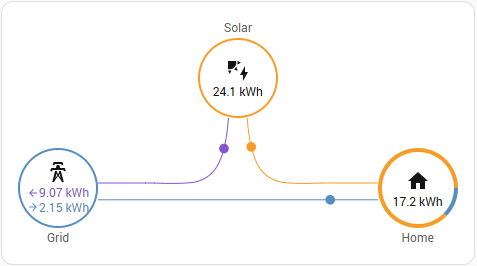
Home Assistant: Open Source Energiemanagement für die Solarbank 4
Home Assistant ist für viele das beste Betriebssystem für Home Automation, weil es lokal laufen kann (z.B. auf NUC, Raspberry Pi, VM, NAS) und weil du Integrationen, Dashboards und Automationen frei kombinierst. Die Idee: deine Solarbank ist kein "App-Gadget", sondern ein Baustein im Gesamtsystem.
Typische Home-Assistant-Automationen rund um einen Energiespeicher sind einfach, aber wirkungsvoll: laden, wenn PV-Überschuss da ist; entladen, wenn der Hausverbrauch steigt; Lade- und Entladegrenzen setzen; Reserve halten, wenn am Abend viel Verbrauch erwartet wird.
- Lokale Automationen: Regeln laufen bei dir, nicht in einer Cloud.
- Dashboards: PV, Hausverbrauch, Speicher, Netzbezug in einer Ansicht.
- Smart Home Szenarien: Speicher priorisieren, wenn Wärmepumpe/Kochen/EV-Laden startet.
Home Assistant: open-source energy management for Solarbank 4
Home Assistant is one of the best platforms for home automation because it can run locally (NUC, Raspberry Pi, VM, NAS) and lets you combine integrations, dashboards, and automations freely. The idea: your Solarbank isn’t just an app gadget, it’s a building block in a complete energy system.
Typical Home Assistant automations around a battery are simple but effective: charge when PV surplus is available; discharge when household load rises; set charge/discharge limits; keep a reserve when you expect higher evening consumption.
- Local automations: rules run in your home, not in a cloud.
- Dashboards: PV, home load, battery, grid import in one view.
- Smart home scenarios: prioritize the battery when heat pump/cooking/EV charging starts.
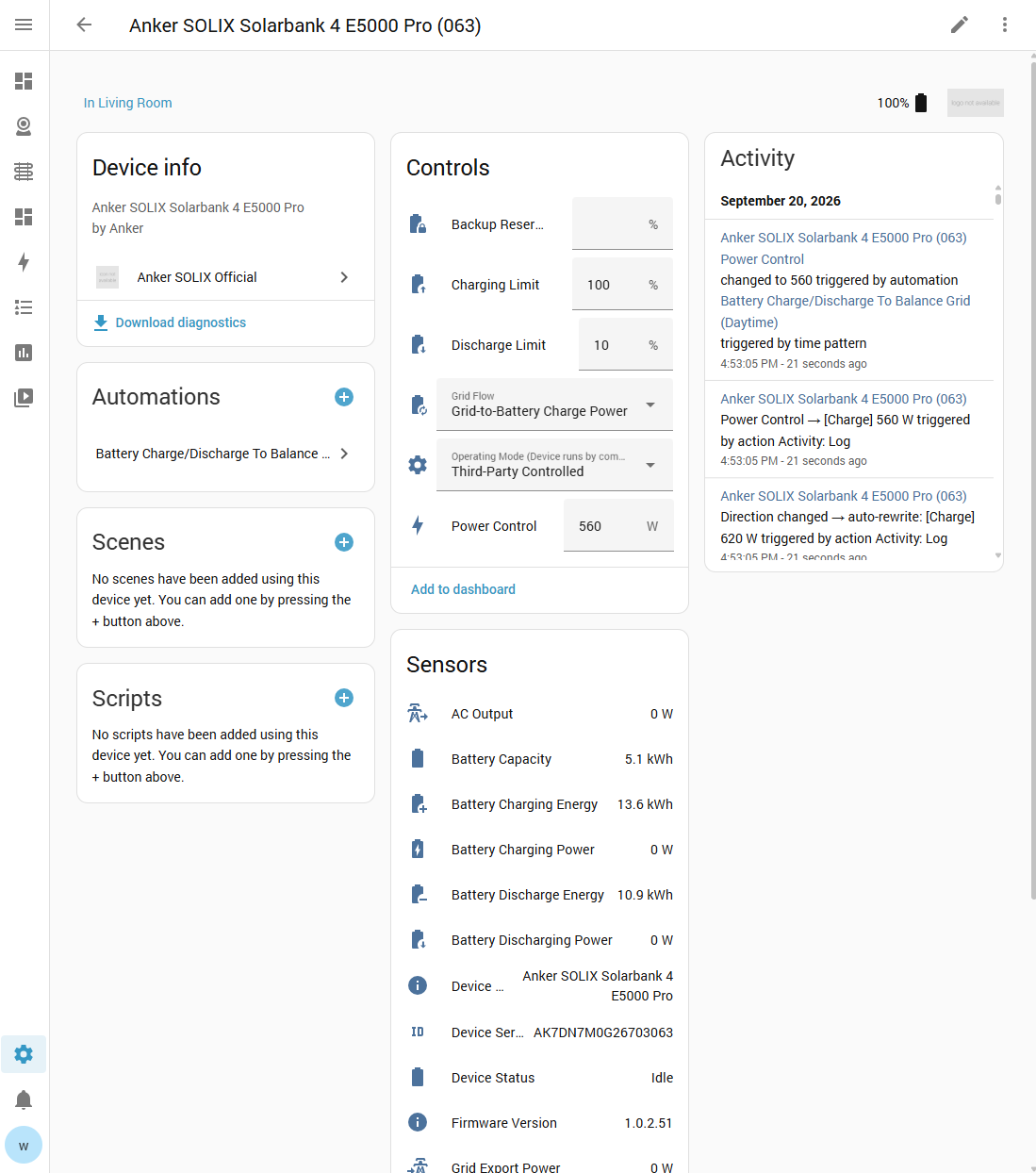
Offizieller Home Assistant Support (Anker SOLIX)
Wenn du Wert auf eine möglichst saubere Integration legst, ist der offizielle Home‑Assistant‑Connector ein wichtiger Baustein: klare Entities, regelmäßige Updates und ein direkter Bezug zum Hersteller‑Ökosystem.
GitHub‑Projekt: https://github.com/anker-charging/ha-anker-solix-official
Official Home Assistant support (Anker SOLIX)
If you care about a clean integration, the official Home Assistant connector is a big win: clear entities, ongoing updates, and a direct link to the vendor ecosystem.
GitHub project: https://github.com/anker-charging/ha-anker-solix-official
Lokal ohne Cloud: warum lokale Steuerung per WLAN wichtig ist
Viele Smart-Home-Produkte sind nur dann "smart", wenn du ein Cloud-Konto nutzt. Für Energiespeicher ist das oft unattraktiv: dein Energieprofil ist sensibel, dein Energiesystem ist langfristig, und Ausfälle durch externe Dienste sind nervig.
Der Anspruch dieser Seite ist deshalb klar: lokale Steuerung (Heimnetz/WLAN), voll lokal im Alltag, und keine Cloud-Subscription als Voraussetzung.
- Stabilität: lokale Automationen reagieren sofort und laufen auch bei Internetproblemen.
- Datenschutz: weniger Daten müssen das Haus verlassen.
- Kontrolle: Home Assistant ist dein "Single Pane of Glass" für Energie und Smart Home.
Local without cloud: why local Wi‑Fi control matters
Many smart home products only stay "smart" as long as you use a cloud account. For energy storage, that’s often a bad deal: your energy profile is sensitive, your system is long-lived, and outages caused by external services are frustrating.
This page is therefore explicitly local-first: local control in your home network (Wi‑Fi), fully local day-to-day, and no mandatory cloud subscription as a requirement.
- Stability: local automations react instantly and keep working during internet issues.
- Privacy: less data needs to leave your home.
- Control: Home Assistant becomes the single dashboard for energy and smart home logic.
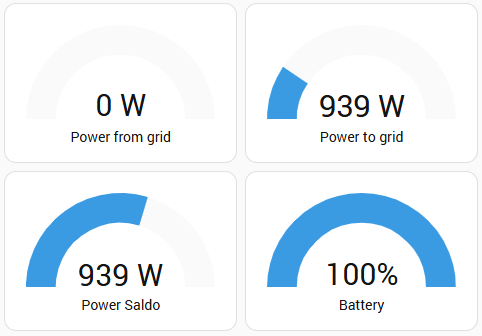
Dynamische Strompreise: günstig kaufen, später nutzen (Preis-Puffer)
Ein PV-Speicher kann mehr als nur PV-Überschuss speichern. Wenn du einen Tarif mit dynamischen Strompreisen nutzt, wird ein Speicher zur Batterie für deinen Strompreis: bei günstigen Stunden laden und bei teuren Stunden entladen.
In Home Assistant kannst du diese Logik sauber automatisieren: Ladefenster nach Preis, Mindest-SoC als Reserve, und Prioritäten nach Verbrauch. So wird die Solarbank 4 zum perfekten Buffer für dein Heim.
- Arbitrage: billig laden, teuer nutzen (wenn es in deinem Setup technisch/vertraglich passt).
- Lastspitzen glätten: weniger Netzbezug in teuren Peak-Zeitfenstern.
- Planbar: Regeln sind transparent und anpassbar (Open Source statt Blackbox).
Dynamic electricity prices: charge cheap, use later (price buffer)
A PV battery can do more than store PV surplus. If you have a plan with dynamic electricity prices, the battery becomes a time-shift buffer for your costs: charge during cheap hours and discharge during expensive hours.
In Home Assistant, you can automate this cleanly: charge windows based on price, a minimum SoC reserve, and priorities based on household load. This turns Solarbank 4 into a practical buffer for your home.
- Arbitrage: charge cheap, use expensive (when it fits your technical and contractual setup).
- Smooth peaks: reduce grid import during expensive peak windows.
- Transparent: rules are visible and adjustable (open logic instead of a black box).
FAQ: Anker Solarbank 4, Home Assistant, lokale Steuerung
Ist die Anker SOLIX Solarbank 4 gut für Home Assistant und Smart-Home-Automationen?
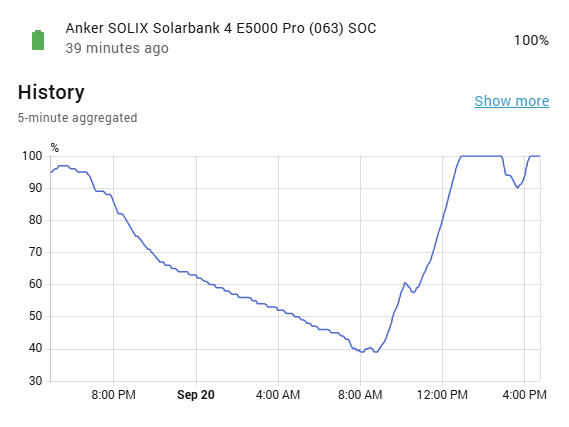
Ja, ein Energiespeicher gewinnt stark, sobald du ihn in Home Assistant einbindest: du kannst Automationen für PV-Überschuss, Haushaltsverbrauch, Zeitfenster und Strompreis bauen und bekommst ein lokales Dashboard für dein Home-Automation-Energiemanagement.
Warum sind "lokal" und "ohne Cloud" so wichtig?
Weil ein Energiesystem langfristig läuft. Lokale Steuerung im Heimnetz reduziert Abhängigkeiten, erhöht Stabilität (auch bei Internetproblemen) und ist besser für Datenschutz. Darum optimiert diese Seite auf Keywords wie lokale Steuerung, WLAN lokal, ohne Cloud und ohne Abo.
Kann ich mit einem PV-Speicher auch bei dynamischen Strompreisen sparen?
Oft ja: du lädst in günstigen Stunden und nutzt den Strom später. In Home Assistant kannst du Preis-Sensoren und Energieregeln kombinieren. Bitte beachte die technischen und tariflichen Rahmenbedingungen in deinem Setup.
Wo finde ich die offizielle Produktseite zur Anker Solarbank 4?
FAQ: Anker Solarbank 4, Home Assistant, local control
Is the Anker SOLIX Solarbank 4 a good fit for Home Assistant and smart home automations?
Yes. A battery becomes much more useful once it is connected to Home Assistant: you can build automations based on PV surplus, household load, time windows, and price signals, and you get a local dashboard for your smart home energy management.
Why do "local" and "no cloud" matter?
Because an energy system is long-lived. Local control in your home network reduces dependencies, improves stability (even during internet issues), and is better for privacy. That’s why this page targets keywords like local control, local Wi‑Fi, no cloud, and no subscription.
Can a PV battery help with dynamic electricity prices?
Often yes: charge during cheap hours and use later. In Home Assistant, you can combine price sensors with energy rules. Please consider the technical and contractual constraints of your setup.
Where is the official product page for Anker Solarbank 4?
Here: Anker SOLIX Solarbank 4